
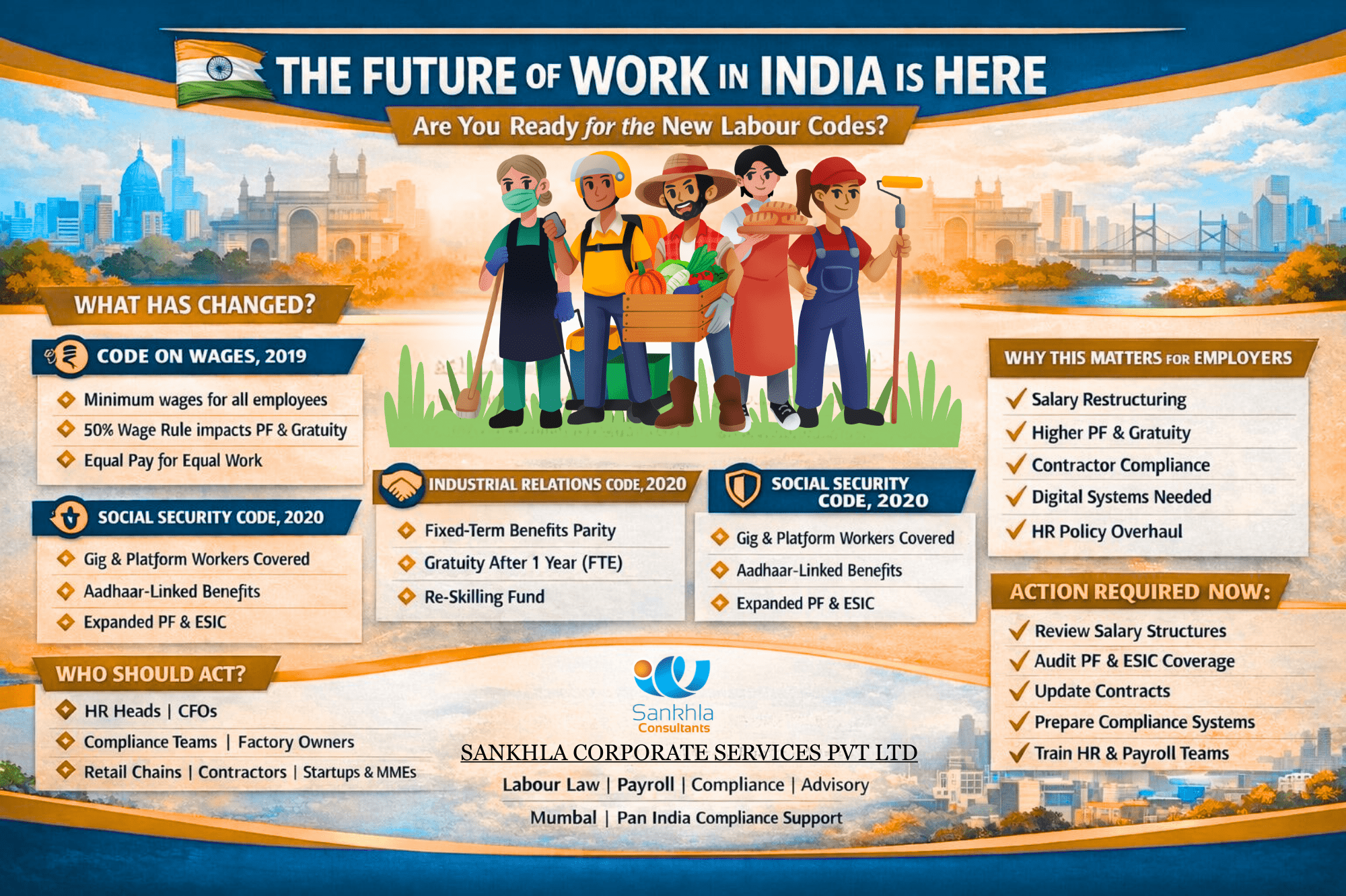
India’s labour law landscape is undergoing one of its most significant transformations in decades. With the introduction of the New Labour Codes, the government aims to simplify compliance, improve worker protection, and modernize employment regulations across industries. These reforms consolidate numerous existing labour laws into four comprehensive codes, creating a more structured, transparent, and business-friendly regulatory framework.
This blog explains the key changes, their impact on employers, and what organizations must do to stay compliant.
Understanding the Shift: What Has Changed?
1. Code on Wages, 2019
The Code on Wages standardizes wage regulations across sectors and states.
Major highlights include:
- Minimum wages for all employees — ensures universal wage protection.
- 50% wage rule — affects salary structuring and impacts PF and gratuity calculations.
- Equal pay for equal work — strengthens pay parity regardless of gender or employment type.
This code aims to eliminate inconsistencies in wage definitions and bring uniformity nationwide.
2. Industrial Relations Code, 2020
This code governs employer-employee relations and industrial disputes.
Key provisions:
- Parity of benefits for fixed-term employees
- Gratuity eligibility after 1 year for fixed-term employees
- Re-skilling fund for workers impacted by layoffs
It balances flexibility for employers with protection for workers, promoting stability in industrial relations.
3. Social Security Code, 2020
The Social Security Code expands coverage and modernizes benefits administration:
- Gig and platform workers covered under social security schemes
- Aadhaar-linked benefits for streamlined access
- Expanded PF & ESIC coverage
This is a major step toward formalizing India’s growing gig economy and extending safety nets to non-traditional workers.
Why These Changes Matter for Employers
The new labour codes are not just legal updates—they directly influence how organizations design compensation, manage workforce compliance, and structure HR policies.
Key implications include:
- Salary restructuring requirements
- Higher PF and gratuity liabilities
- Increased contractor compliance obligations
- Need for digital compliance systems
- Comprehensive HR policy revisions
Employers who fail to adapt risk penalties, disputes, and reputational damage.
Who Should Take Action?
These reforms affect a wide spectrum of stakeholders, including:
- HR Heads and CFOs
- Compliance and Legal Teams
- Factory Owners and Manufacturing Units
- Retail Chains and Contractors
- Startups and MSMEs
Any organization employing staff in India must evaluate its compliance readiness.
Action Plan for Organizations
To prepare for implementation and ensure compliance, companies should immediately:
- Review salary structures to align with wage definitions.
- Audit PF and ESIC applicability across workforce categories.
- Update employment contracts and HR manuals.
- Implement digital compliance tracking systems.
- Train HR and payroll teams on new regulatory requirements.
Proactive preparation reduces risk and ensures a smooth transition once enforcement timelines are finalized.
Final Thoughts
The new labour codes represent a forward-looking shift toward a more organized, inclusive, and transparent employment ecosystem in India. While they simplify legal frameworks, they also demand greater compliance discipline from employers.
Organizations that act early will not only avoid penalties but also build stronger workforce trust, improve governance standards, and enhance operational efficiency.
Sankhla Corporate Services Pvt. Ltd. provides expert support in labour law compliance, payroll, advisory, and regulatory management across India. With the right guidance, businesses can turn regulatory change into a strategic advantage.


